
Hooters 1983 to 1993 in Brief
Hooters 1983 to 1993 covers the brand’s most important decade. Hooters went from a single Clearwater restaurant to a national name, and the story of Hooters 1983 to 1993 includes both triumph and tragedy. Few chapters in Hooters 1983 to 1993 matter more than the rapid franchise growth. This look at Hooters 1983 to 1993 follows the founders year by year. Read on for the full timeline of Hooters 1983 to 1993.
On April 1, 1983, six businessmen opened what they assumed would be a short-lived joke of a restaurant in Clearwater, Florida. They had chosen April Fools’ Day as a symbolic founding date, poking fun at themselves in case the venture failed. But instead of disappearing, Hooters became a cultural lightning rod and a national phenomenon. Over the course of Hooters 1983 to 1993, the brand evolved from a gas station-turned-beach-joint with irreverent charm to a major brand tied to sports, marketing power plays, and ultimately, a heartbreaking tragedy that would bring its first chapter to a devastating end.
The Origins: Clearwater, October 1983
The story begins with the infamous “Hooters Six“—L.D. Stewart, Gil DiGiannantonio, Ed Droste, Billy Ranieri, Dennis Johnson, and Ken Wimmer. These men weren’t restaurateurs by trade, but they had an idea for a place that combined cold beer, hot wings, good times, and attractive waitresses in orange shorts. The concept was both simple and bold: create a casual dining environment that appealed unapologetically to working-class men.
They opened the first Hooters in a renovated former gas station, painting a cartoon owl over the building and leaning heavily into humor, sex appeal, and novelty. The gamble paid off locally—but without the involvement of Hugh Connerty, it likely would have ended there. The Hooters Six lacked both the vision and operational infrastructure to take the concept beyond Clearwater.
Hugh Connerty: The Catalyst for Expansion
It was Hugh Connerty who saw what the original six didn’t—a brand with national potential. Connerty, a seasoned and respected restaurateur, recognized that Hooters had tapped into a unique cultural nerve. More importantly, he had the experience and network to scale it. Through his company, Neighborhood Restaurants of America, Connerty negotiated the first major licensing agreement and began developing new locations in December 1984.
He wasn’t just an investor—he was a builder, a strategist, and a visionary. Connerty understood how to take a quirky local brand and mold it into a franchisable powerhouse. He brought systems, professionalism, and momentum. Without him, Hooters would have been a one-store wonder. With him, it became a scalable, recognizable force in American dining.
The Formula: Wings, Beer, and Hooters Girls
While the food and beer mattered, the magic formula included the now-iconic Hooters Girl. These young women, clad in white tank tops and bright orange shorts, became the face of the brand. To some, they represented lighthearted Americana; to others, an offensive throwback to outdated gender roles. But regardless of opinion, the marketing worked.
Hiring Hooters Girls was about more than looks. Personality, confidence, and the ability to create a fun atmosphere were essential. The result was something between cheerleader, server, and entertainer. Hooters Girls graced calendars, commercials, and TV interviews, turning the servers into minor celebrities and the brand into a phenomenon.
Scaling Up: Connerty’s Blueprint for Growth
Connerty’s influence can’t be overstated. His ability to spot talent, manage logistics, and sell the brand led to rapid development. He didn’t just open restaurants—he opened territories. Locations sprouted across Florida and into the Southeast, with massive grand opening parties, local news coverage, and long lines of customers.
He also cultivated new leaders and brought in partners who could take the model further. Licensing deals and operational partnerships under Connerty’s leadership created a controlled but aggressive growth engine. This was not reckless expansion—it was smart franchising executed with vision.
Enter the Power Players: Robert H. Brooks
Eventually, more heavyweight players entered the fold. Robert H. Brooks, a wealthy entrepreneur from South Carolina, had already proven himself with Eastern Foods. When he joined the Hooters ecosystem in the late 1980s, he brought both capital and a clear goal: consolidate the brand and centralize control.
Brooks began developing stores under his own licensing rights. But his real ambition was “Hooters of America”—a unified entity that would own, operate, and franchise Hooters under one roof. While this brought legal tension and ownership struggles, Brooks succeeded in reshaping the company’s structure.
In 1991, Brooks acquired Connerty’s licensing rights after Connerty failed to repay significant loans. This effectively gave Brooks the power to realign the company’s leadership and direction.
His son, Mark Brooks, also entered the picture as director of marketing. Mark’s youthful charisma and strategic thinking helped connect Hooters to the next generation. Under his direction, the company embraced more national media, merchandise campaigns, and eventually, motorsports.
Hooters Goes Mainstream
By 1990, Hooters was more than just a restaurant chain—it was a cultural flashpoint. With dozens of locations and a national presence, the brand had embedded itself into American life. It was parodied, protested, celebrated, and scrutinized.
Hooters’ hiring policies drew lawsuits. Its uniforms drew protests. But none of this hurt the brand. In fact, the controversy fueled free media and solidified its image as a cheeky, all-American underdog. It leaned into the attention and doubled down.
The NASCAR Partnership: Alan Kulwicki and the Underdog Spirit
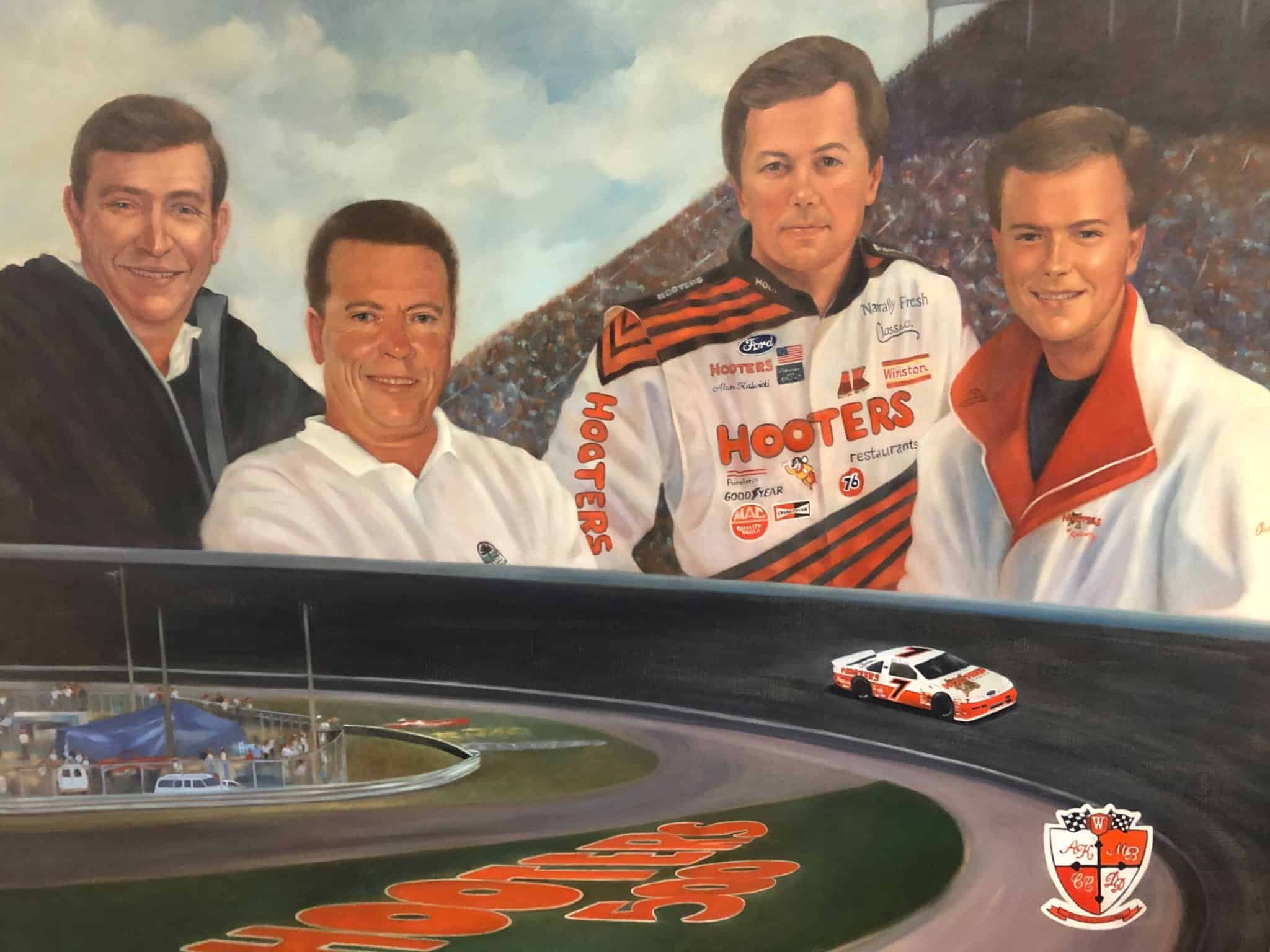
In 1992, Hooters took its boldest branding step yet: sponsoring NASCAR driver Alan Kulwicki. Kulwicki, an engineer and owner-driver, was the ultimate underdog—precise, principled, and fiercely independent. His values aligned with the Hooters brand: unconventional, defiant, and hungry to win.
That year, Kulwicki stunned the racing world by winning the Winston Cup Championship, defeating giants with bigger budgets. It was a victory for the little guy, and Hooters’ branding was front and center.
The sponsorship was spearheaded by Mark Brooks, who saw in Kulwicki a brand partner, not just a driver. Together, they created one of the most iconic marketing moments in motorsports history.
April 1, 1993: The Crash
Then came tragedy.
On April 1, 1993—ten years to the day after the Hooters concept was conceived—a Fairchild Merlin IIIC aircraft carrying Alan Kulwicki, Mark Brooks, pilot Dan Duncan, and crew chief Charlie Campbell crashed on final approach to Tri-City Regional Airport in Tennessee. All four were killed.
The cause: engine failure from ice buildup due to a malfunctioning de-icing system. The impact on both NASCAR and the Hooters organization was immediate and devastating.
Mark Brooks had been the future of Hooters. His death left a void in leadership, vision, and spirit. Kulwicki’s passing ended one of the most inspiring championship legacies in racing history.
The Aftermath: End of an Era
The crash drew a curtain on Hooters 1983 to 1993, the first decade of the brand.
Robert H. Brooks took greater control of the brand. Expansion continued, but the tone shifted. The wild, pioneering spirit of the Connerty-led era gave way to corporate structure and strategic scaling. Franchising grew. So did standardization. But something of the soul was gone.
Hugh Connerty’s early role faded in official narratives, but insiders knew the truth: without Connerty’s drive, connections, and foresight, Hooters would never have reached its first milestone, let alone survived its first tragedy.
Legacy of Hooters 1983 to 1993
-
What began as a joke became a multimillion-dollar brand. Hooters introduced a new kind of casual dining, shaped pop culture, and created a franchise model that others would emulate.
-
But its first decade is more than business history—it’s a human story. It’s the story of Hugh Connerty, the unsung architect of national expansion. The story of Mark Brooks, whose energy pushed Hooters into bold new spaces. And of Alan Kulwicki, whose independent spirit gave the brand a face in the world of racing.
-
On October 4, 1983, a restaurant opened that should have failed. Ten years later, on April 1, 1993, it buried two of its most important figures.
-
That first decade was about risk, reward, and the high cost of ambition. And it remains the foundation of everything Hooters would become.
The Legacy of Hooters 1983 to 1993
Hooters 1983 to 1993 set the foundation for everything that followed. Want more than Hooters 1983 to 1993? Continue with the Hooters first decade and the history of Hooters. Hooters 1983 to 1993 remains the era most fans remember. Share this story of Hooters 1983 to 1993 with anyone who loves the brand. The arc of Hooters 1983 to 1993 is one of the great restaurant stories.