
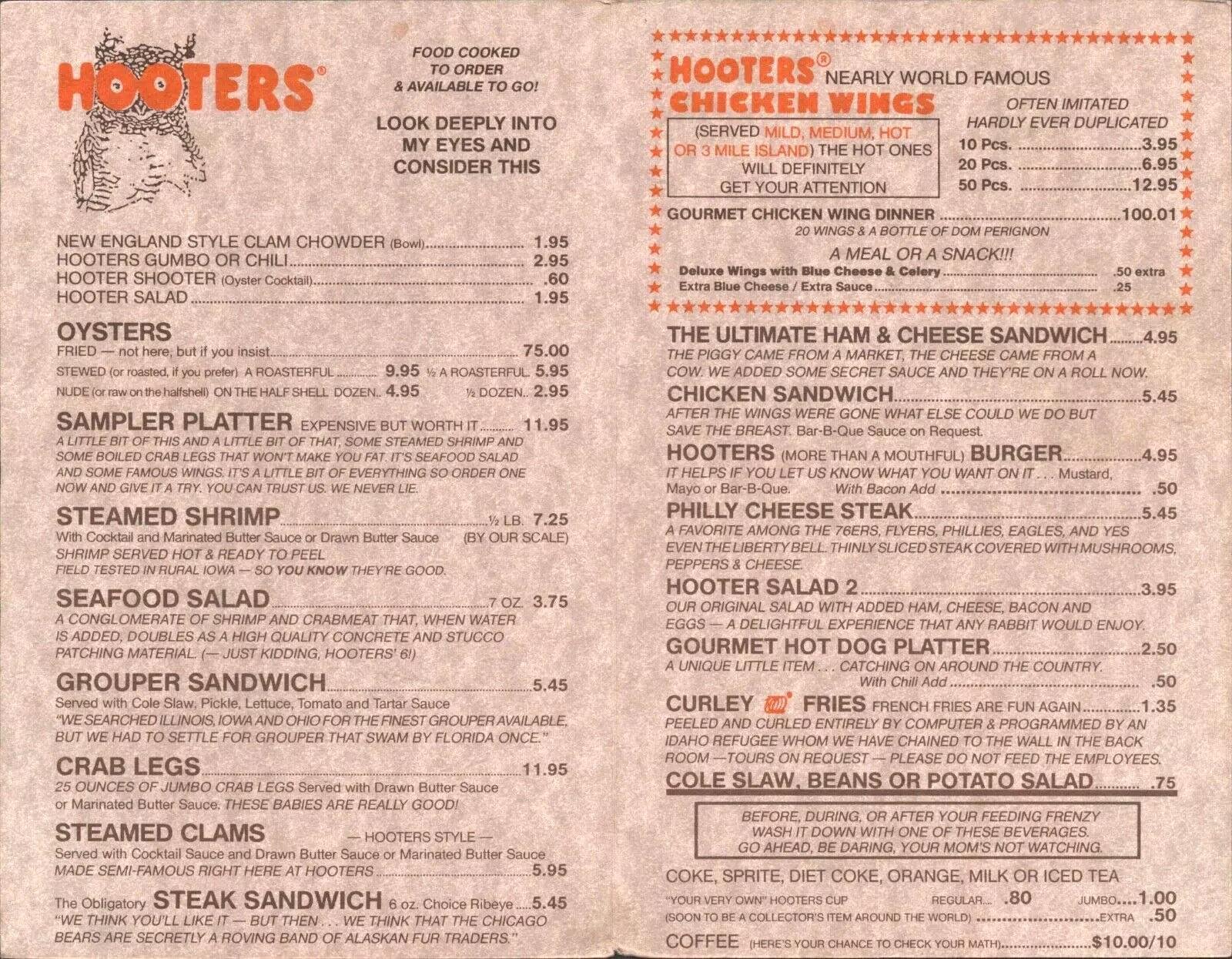
The Real Reason Hooters Failed is a topic that has sparked endless debate among marketing analysts, restaurant industry insiders, and nostalgic patrons alike. For decades, the orange shorts and tight tank tops defined an era of casual dining that seemed untouchable. However, looking closely at the financial trajectory and consumer feedback of the last ten years, it becomes evident that the brand's struggles were not merely a casualty of "cancel culture" or changing social mores regarding objectification. While those factors played a role, they were not the smoking gun. The smoking gun was in the kitchen.
To understand the real reason Hooters failed to maintain its dominance, one must look past the waitresses and look at the plate. For a generation, the novelty of the "breastaurant" concept was enough to get people in the door. But as the novelty wore off and the casual dining market became fiercely competitive, the food quality—specifically the reliance on frozen, deep-fried fare—could not keep them there. This article will explore why the culinary strategy, not the dress code, was the true anchor dragging the ship down.
The Cultural Shift vs. The Real Reason Hooters Failed
When discussing the real reason Hooters failed, it is easy to point fingers at the changing demographic landscape. It is true that Millennials and Gen Z are generally less enchanted by the objectification inherent in the brand's premise than Gen X or Boomers were. However, this cultural explanation fails to account for the success of competitors like Twin Peaks or Tilted Kilt, which managed to grow during periods when Hooters stagnated. If the concept itself was entirely "dead," those chains should have collapsed alongside the original. They didn't.
This discrepancy highlights that the real reason Hooters failed had less to do with the "girls" and more to do with the "grub." During the 2010s, the American palate underwent a massive sophistication overhaul. The "foodie" culture exploded. Consumers started caring deeply about farm-to-table sourcing, fresh ingredients, and craft preparation. While competitors adapted by upgrading their menus to scratch kitchens and craft beers, Hooters remained stubbornly attached to a menu that felt trapped in 1983.
The Freezer Problem: Why Food Quality Matters
The URL slug of this very post hints at a critical truth: it wasn't the shorts; it was the freezer. This is central to understanding the real reason Hooters failed. In the early days, Hooters’ wings were legendary. They were the primary draw, with the scenery being the secondary perk. But as cost-cutting measures took hold and the chain expanded rapidly, the reliance on frozen products increased.
In an age where fast-casual giants like Chipotle were boasting about fresh ingredients and no freezers, Hooters’ reliance on frozen appetizers and wings became a liability. You cannot charge premium sit-down prices for food that tastes like it came from the frozen aisle of a grocery store. When customers realized they could get better wings at a local pub or even a Wingstop for a fraction of the hassle, the value proposition collapsed. Thus, the real reason Hooters failed was a fundamental failure to innovate the product. Comparing Competitors: Twin Peaks vs. Hooters
To truly identify the real reason Hooters failed, we must look at Twin Peaks. Twin Peaks positioned itself as the "lodge" to Hooters’ "beach shack." But the branding wasn't the only difference; Twin Peaks marketed its "made-from-scratch" kitchen aggressively. They served beer at 29 degrees and touted food that was actually prepared in-house.
Hooters, by contrast, rested on its laurels. They assumed the brand name was enough. They underestimated the modern consumer's ability to discern quality. When a customer walks into a Twin Peaks, they might go for the view, but they return for the pot roast or the steak. When a customer walked into Hooters in 2018, they often left feeling bloated from sodium-heavy, processed food. That lack of return business is the real reason Hooters failed to grow its same-store sales figures for so long.
The Stagnation of the Menu
Another aspect of the real reason Hooters failed was menu stagnation. For years, the menu looked exactly the same. While other chains were introducing quinoa bowls, avocado toast, or artisanal burgers, Hooters was still pushing the same clam chowder and curly fries. There is something to be said for classics, but there is a fine line between "classic" and "obsolete."
The refusal to update the menu to cater to lighter tastes or dietary restrictions meant that the "veto vote" became a serious issue. In group dining scenarios, if one person in the party wants a salad that isn't just iceberg lettuce and croutons, Hooters is immediately vetoed. By alienating the health-conscious consumer, the chain limited its potential audience significantly. This inflexibility is a core component of the real reason Hooters failed.
The Attempt to Rebrand: Too Little, Too Late?
Hooters did eventually realize that the real reason Hooters failed to capture the younger demographic was the "cringe" factor combined with the food quality. They launched "Hoots," a fast-casual concept with male servers and a focus on takeout wings. They also tried to update the interiors of their main restaurants to look less like a dive bar and more like a modern sports lounge.
However, these changes were often cosmetic. Changing the lighting and the furniture doesn't fix the food. If the wings still come out of the same freezer, the customer experience remains unchanged. The brand identity crisis confused loyalists without effectively attracting new customers. This strategic fumbling further solidified the real reason Hooters failed—a lack of clear vision for the future.
Economic Factors and the Cost of Operations
We must also consider the economic headwinds when analyzing the real reason Hooters failed. Running a full-service restaurant with a large floor staff is expensive. The "Hooters Girl" model requires a high density of servers to maintain the atmosphere. As minimum wages rose across the United States, the operational costs of this model skyrocketed.
Competitors with smaller footprints or counter-service models (like Buffalo Wild Wings in some formats) could operate with leaner margins. Hooters was stuck with a high-labor model selling a low-margin product (frozen food). This economic squeeze made it difficult to invest in better ingredients, creating a vicious cycle. They cut food costs to save money, which lowered quality, which drove away customers, which lowered revenue. This cycle is mathematically the real reason Hooters failed.
The "Family Friendly" Dilemma
For years, Hooters tried to argue it was a family-friendly establishment. They sold merchandise for children and tried to position themselves as a neighborhood joint. This confused messaging is part of the real reason Hooters failed. It is difficult to sell a "sex appeal" brand to families.
By trying to play both sides—appealing to men wanting a "man cave" and families wanting a dinner spot—they satisfied neither. The atmosphere was often too rowdy for families but too sanitized for the bachelor party crowd compared to grittier competitors. A brand that tries to be everything to everyone ends up being nothing to anyone. This lack of a targeted demographic focus contributed to the real reason Hooters failed.
The Rise of Delivery Apps
The explosion of UberEats, DoorDash, and GrubHub also exposed the real reason Hooters failed. Hooters is an "experiential" brand. You pay a premium not just for the wings, but for the service and the atmosphere. When you take the food out of that environment and put it in a cardboard box delivered by a stranger, the value proposition evaporates.
Hooters wings, when delivered cold and soggy, are indistinguishable from any other generic wing. Without the "Hooters Girl" service interaction, the brand has no leverage. Because they had neglected the food quality for so long (the freezer issue), their product could not stand on its own in a delivery-first economy. This inability to pivot to off-premise dining effectively is the real reason Hooters failed to survive the transition to the digital dining age.
The "Freezer" Metaphor in Business
When we say the real reason Hooters failed was the freezer, we are using it as a metaphor for "frozen" management. The leadership was frozen in time. They believed that a business model from 1983 would work in 2023 without significant adjustment. They froze their menu, they froze their branding, and they froze their strategy.
Businesses that succeed are fluid; they adapt to the market. Hooters was rigid. They doubled down on a controversial image while neglecting the core product. In the restaurant industry, you can survive bad service if the food is amazing. You can survive average food if the experience is amazing. But you cannot survive average food and a controversial experience when the market is offering better alternatives on both fronts. That rigidity is the real reason Hooters failed.
Marketing Missteps
Marketing campaigns often focused on the calendar girls and the pageants rather than the dining experience. While this sold calendars, it didn't sell lunches. The disconnect between their marketing spend and their revenue drivers was stark. They spent millions promoting the "lifestyle" of Hooters, but very little promoting the culinary excellence—because there was little to promote.
If they had taken half of their marketing budget and invested it in fresh poultry and a chef-driven menu update, the story might be different today. But they didn't. They bet on the girls, and they lost. That strategic bet is the real reason Hooters failed.
Lessons Learned
The real reason Hooters failed is a complex mix of outdated branding, economic pressure, and changing demographics, but the core issue was the product itself. The "freezer" represents the lack of freshness, both in the kitchen and in the boardroom.
They allowed their competitors to out-cook them. They allowed the market to out-evolve them. And they allowed their own identity to become a caricature of itself. For any business looking to avoid the same fate, the lesson is clear: never let your core product degrade in favor of your gimmick. The gimmick brings them in, but the quality brings them back. Hooters forgot this, and that is the real reason Hooters failed.