From Goose Creek to the grid. Music has never been just a hobby for me. It hasn’t even just been a passion. For the better part of my life, music has been a survival mechanism—a constant frequency cutting through the static of physical pain, incarceration, and the chaos of growing up. Looking back, the trajectory from the halls of Goose Creek High School to a modern, professional-grade production studio wasn’t a straight line. It was a waveform, full of violent peaks and deep valleys, defined by the noise of the world and the sound I learned to control.
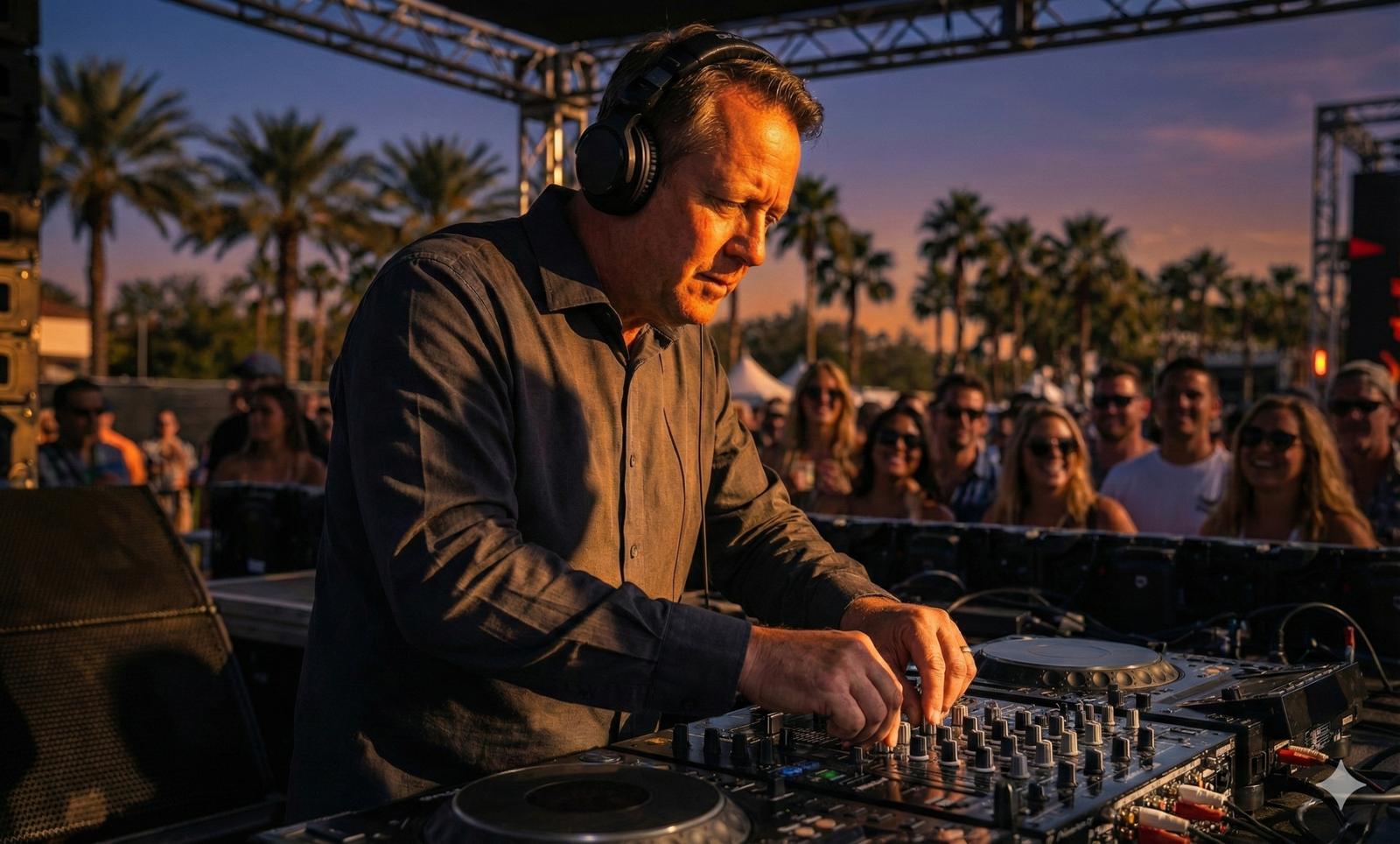
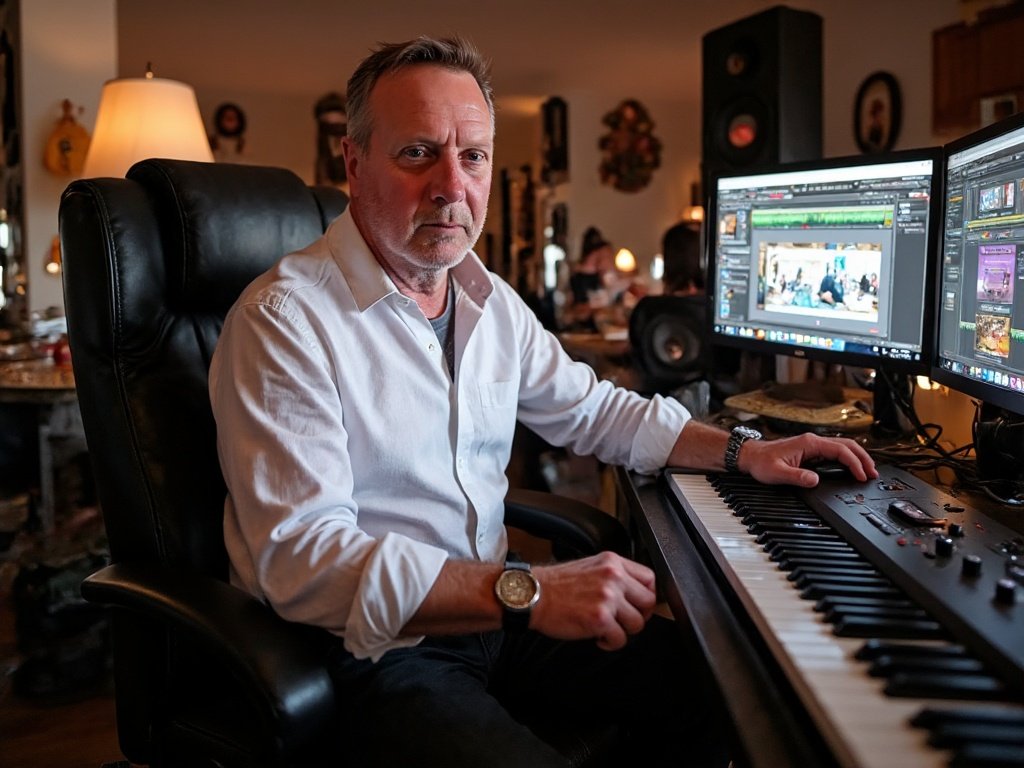
The Foundation: Goose Creek and the First Spark
The journey solidified in the 11th grade at Goose Creek High School. For many, high school is a blur of social hierarchy and academic pressure, but for me, it was the year the background noise faded, and the rhythm took over. That specific year marked a pivot point where I stopped just listening to music and started dissecting it. I wasn’t interested in the superficial aspects of being in a band; I was obsessed with the mechanics of emotion—how a specific chord change could trigger a feeling of aggression or sorrow. While others were focused on the immediate concerns of adolescence, I was beginning to understand that music offered a language that spoke louder than anything else happening in the hallways. It was the grounding force that prepared me for what was coming next, planting a seed of discipline that would be necessary for the technical hurdles ahead.
The LAN Connection: Bridging Tech and Audio
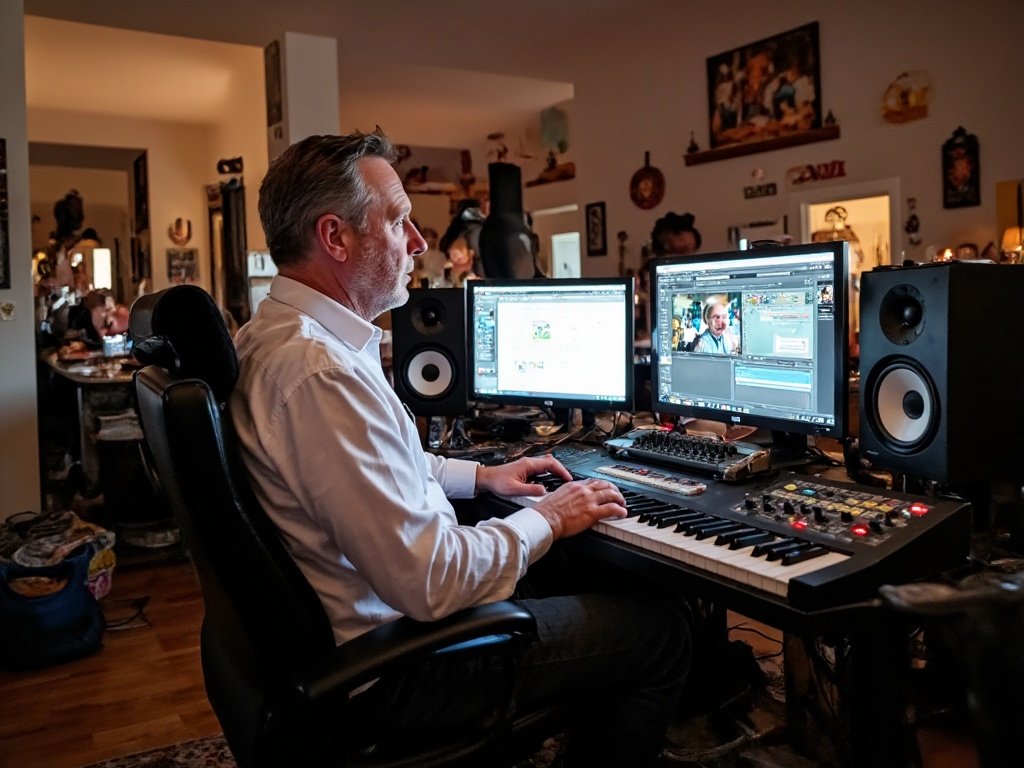
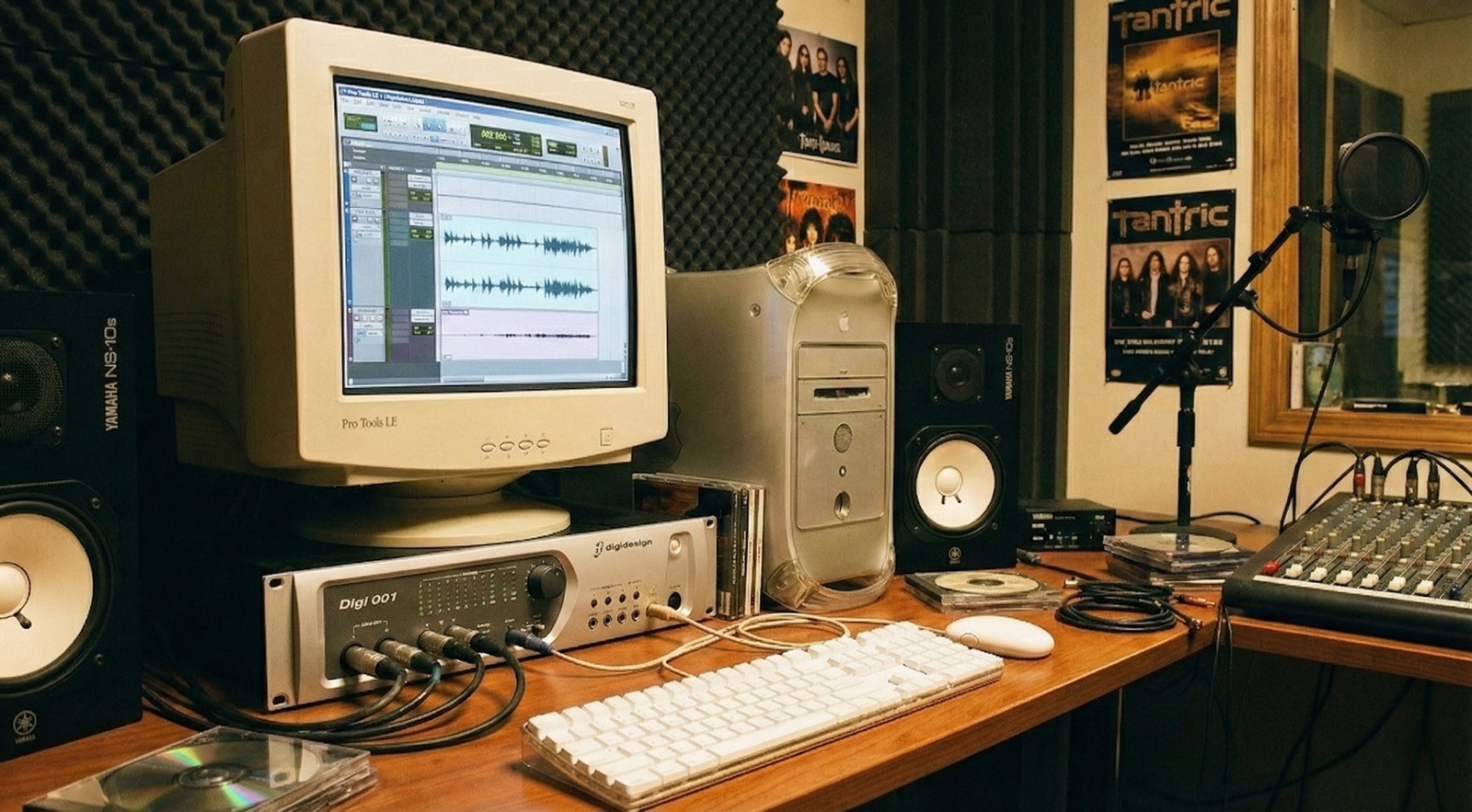
My entry into professional recording wasn’t through a traditional coffee-fetching internship or a lucky break with a label A&R rep—it was through Information Technology. In the late 90s and early 2000s, digital recording was in its infancy. It was volatile, expensive, and technically demanding. I possessed a specific, high-value skill set: I knew how to architect and manage Local Area Networks (LANs). At that time, getting a computer to handle multi-track audio without crashing was a feat of engineering. I leveraged my knowledge of LANs, server stability, and data flow to secure my first Digital Audio Workstation (DAW): Pro Tools.
Understanding the backend of the technology gave me a massive edge. While other musicians were struggling to get the software to communicate with the hardware or losing takes to system crashes, I was already recording. I understood the signal flow inside the machine as well as the signal flow through the mixing board. This technical proficiency became the key that unlocked the studio door, allowing me to bypass the gatekeepers simply because I was the one who could make the system work.
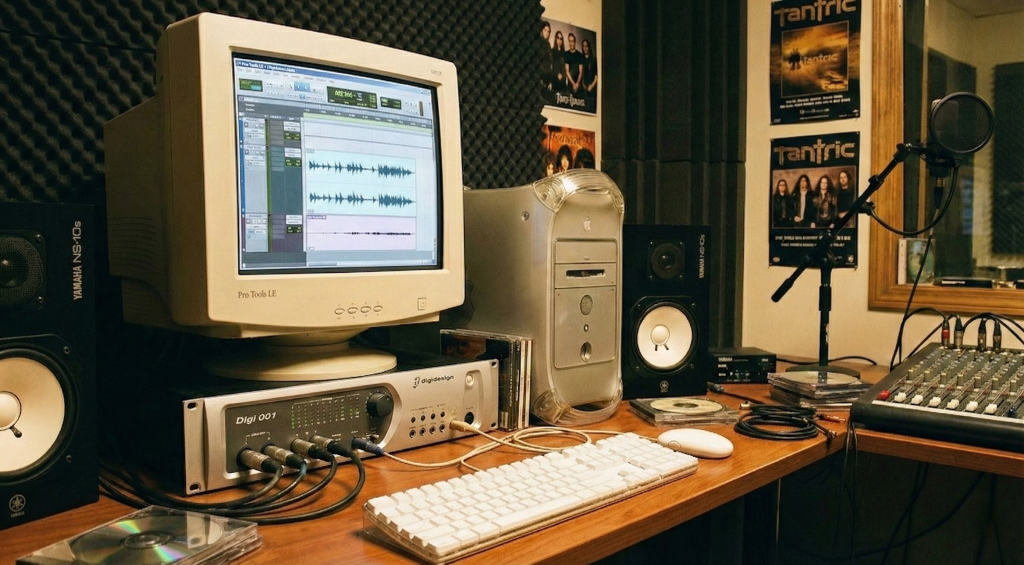
The Studio Years: Days of the New and Tantric
That door opened into rooms occupied by heavy hitters. I found myself in the studio during the recording processes for Days of the New and Tantric. This was the height of the post-grunge era, where acoustic textures were being merged with heavy, distorted rock. This wasn’t just hanging out; it was an immersive education in the alchemy of rock music. I watched the tracking process intently. I saw how the sessions were run, witnessing the sheer physical discipline required to capture a perfect take. It changed my perspective from that of a fan to that of a student. I learned that the magic on the radio was actually hours of tedious, repetitive, and exacting work.
The era was defined by my proximity to greatness. My path crossed with massive acts like Creed, 3 Doors Down, and Kid Rock. I saw the industry at its absolute peak, experiencing the frantic energy of the tours and the intensity of the personalities involved. It was a masterclass in stage presence and the business of being a rock star, but it also highlighted the physical toll that lifestyle extracts.
The Crash, The Injuries, and The Cage
Life, however, rarely moves in a consistent upward trajectory. My physical resilience was tested severely by football—a sport that instilled discipline but left me with injuries that would plague me for years. The gridiron demanded a level of physical sacrifice that eventually caught up with me, leading to chronic issues that required management. But the physical pain was secondary to the loss of freedom. I eventually found myself incarcerated at Eglin FPC (Federal Prison Camp).
Prison strips away the superficial layers of ego. It leaves you with nothing but your thoughts and your time. Eglin was a fermata—a pause that held too long. It was a stark contrast to the high-volume environments of the football stadium. But even in confinement, the music didn’t stop; it just went internal. I spent that time mentally cataloging the sounds I wanted to create. The experience at Eglin, combined with the history of physical trauma from football, added a darker, more authentic grit to my creative output. It taught me that you can lock a man up, but you cannot silence the rhythm in his soul.
The Renaissance: The Ryan Tedder Era
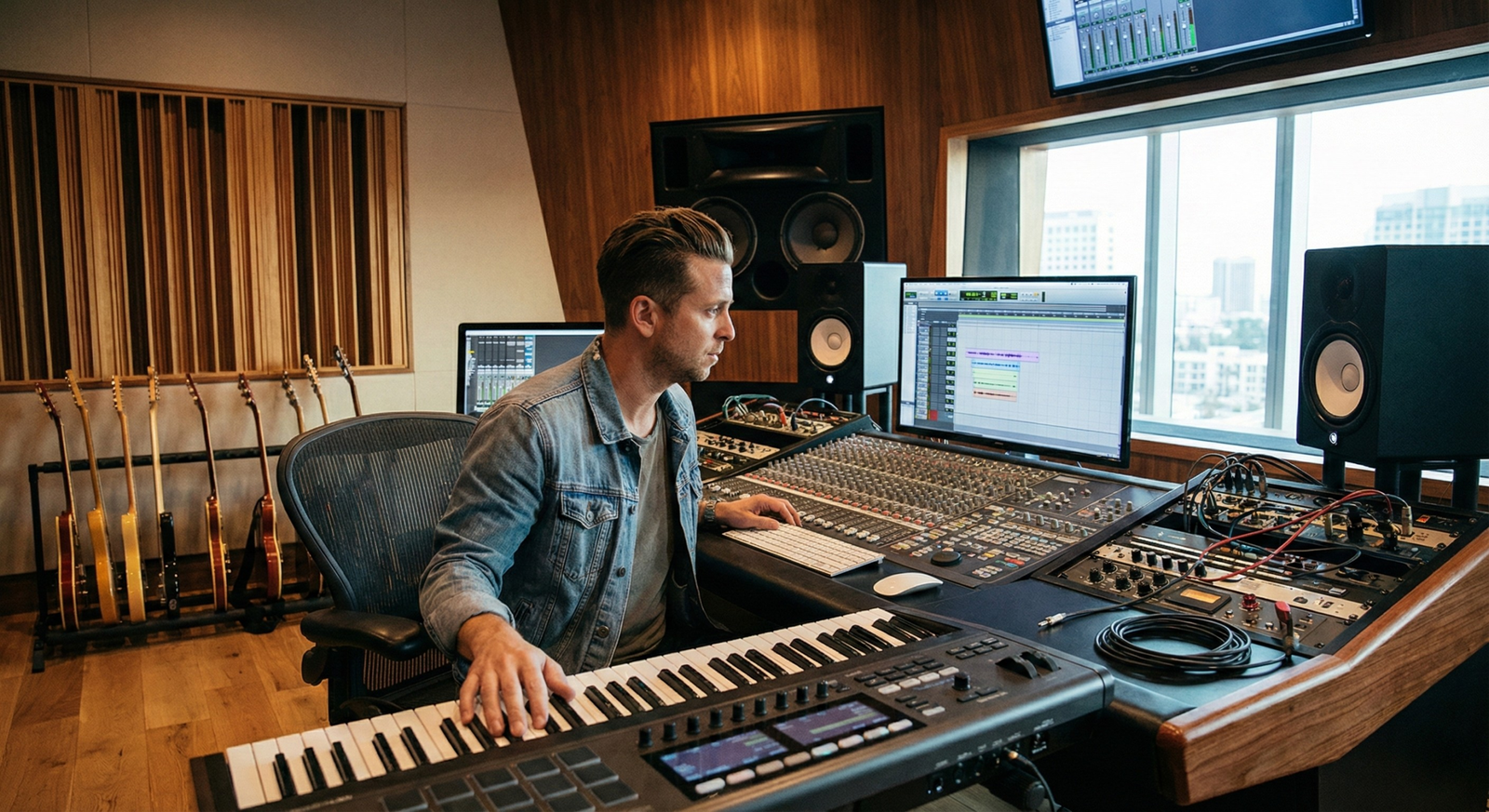
When the world shut down during the COVID-19 pandemic, I refused to stagnate. While the live music industry collapsed, I used the isolation to upgrade my skills, enrolling in an intensive master class with Ryan Tedder, the frontman of OneRepublic and one of the most prolific songwriters and producers of the 21st century.
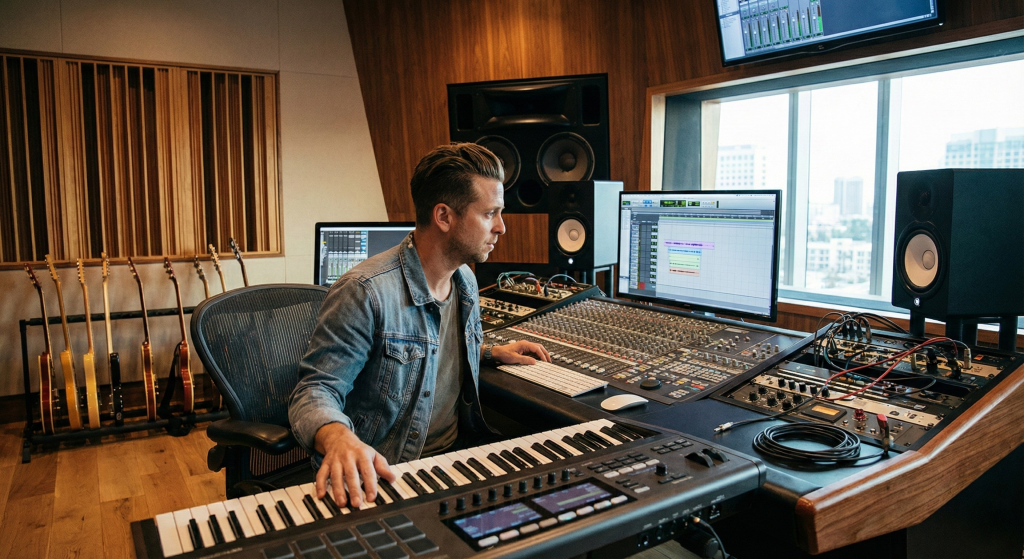
Tedder’s approach deconstructed everything I thought I knew about the traditional rock method of recording. He taught me about efficiency and how to hunt down inspiration rather than waiting for it. I learned how the melody and the hook reign supreme over complexity, and how to utilize the full spectrum of the DAW to create sounds that compete on a global level. This was the final piece of the puzzle. It bridged the gap between my raw, analog experiences in the grunge era and the polished, high-fidelity requirements of modern music production. It allowed me to take the grit of Eglin and the history of Goose Creek and polish them into something stream-ready.
Today, my music is the sum of these disparate parts. It carries the aggression of the football field, the isolation of Eglin FPC, the technical precision of a LAN architect, and the melodic structure of a Ryan Tedder production. I have gone on to perfect my music-making skills, not just to create songs, but to document a life lived loudly, proving that the toughest times often produce the most resonant frequencies.